
Present Perfect + Present Simple for routines
🖼️ Props / visuals
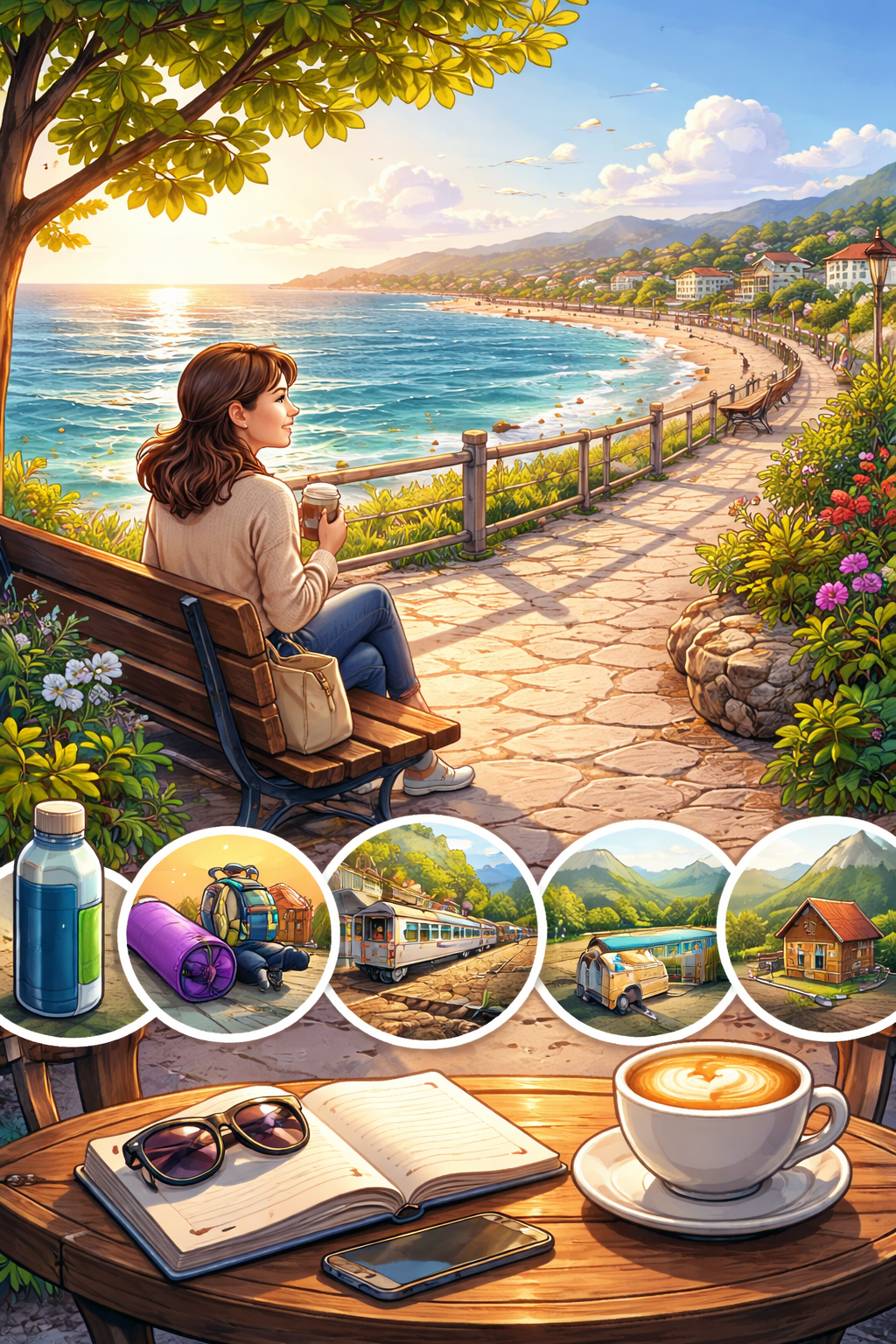
Pictures of:
- a Pilates class 🧘
- a seaside walk 🌊
- a park bench 🌳
- a coffee shop ☕
- a train 🚆
- a small hotel 🏨
- a bike ride 🚲
- a bookshop 📚
- a sunset 🌅
🧩 Board plan / slides checklist
- take a break
- switch off
- recharge
- go for a walk
- attend a class
- spend time outdoors
- take a short trip
- feel refreshed
- feel less stressed
- free time / spare time
🕒 Lesson 2 (60′)
💬 Lead-in / Warm-up (8′)
How do you take a break during a busy week? ☕🌊🚶
Discuss:
- What do you do when you feel tired after work?
- Do you prefer to stay at home or go out?
- What is better: a full weekend away or a short break during the week?
🧠 Vocabulary Focus (10′)
Match the words and meanings
- switch off
- recharge
- attend
- stroll
- routine
- stressed
- refreshed
- escape
a. go to
b. a usual way of doing things
c. take a slow, relaxed walk
d. feel new energy again
e. stop thinking about work and problems
f. a short trip away from normal life
g. tired and worried
h. relaxed and full of energy
Complete the phrases
- take a ______
- go for a ______
- attend a ______ class
- feel less ______
- a short ______ by the sea
- a mini-______ from the city
📖 Reading Text (12′)
Mini-breaks for Busy Adults 🌿
Mini-breaks do not always need planes, hotels, or a lot of money. For many busy adults, a good break is something small and simple that fits into a normal week. Some people finish work and go to a Pilates class. Others take a slow walk by the sea, sit in a park for twenty minutes, or meet a friend for coffee. These short moments do not change everything, but they often help people feel calmer and more in control.
Small breaks during the week can be easier than big plans. A person may not have time for a weekend away, but they can still leave the house, move their body, or spend time outdoors. A short train ride to a nearby town, an evening walk near the beach, or an hour in a bookshop can feel like a real escape after a long day. Many adults say these small breaks help them switch off and return to work with more energy.
Of course, some people also enjoy mini-breaks that last a little longer. One night in a quiet village, a day trip to the mountains, or a Saturday near the coast can be enough to recharge. The important thing is not the distance or the price. What matters is doing something that feels different from your usual routine and gives your mind a rest.
🔎 Reading Comprehension (10′)
- True or False: A good break must be expensive.
- True or False: A Pilates class can be a mini-break.
- True or False: Only weekend trips help adults relax.
- True or False: A short train ride can feel like an escape.
- Which activity is mentioned in the text?
a) going shopping for clothes
b) sitting in a park
c) cleaning the house - What does the writer say is most important?
a) travelling far away
b) spending a lot of money
c) doing something different from your routine - Name two short breaks from the text.
- Why do small breaks help many adults?
🗂️ Useful Language (5′)
Put these into two groups:
weekday mini-breaks / longer mini-breaks
- a Pilates class
- a night in a village
- a walk by the sea
- a day trip to the mountains
- coffee with a friend
- an hour in a bookshop
- a Saturday near the coast
- a short train ride to a nearby town
Discuss
- Which are easy for you?
- Which are difficult?
- Which do you prefer?
🧍🧍 Speaking Task 1 – Find Someone Who… (7′)
Find someone who…
- takes a walk to relax
- likes the seaside
- has attended a class after work
- prefers short breaks to long holidays
- enjoys going somewhere quiet
- likes day trips
- feels better after being outdoors
Follow-up questions
- Where do you go?
- How often do you do that?
- Who do you go with?
- Why do you like it?
🗣️ Speaking Task 2 – Pair Discussion (8′)
Discuss:
- What is the best mini-break after a stressful day?
- Is it better to be active or quiet in your free time?
- Is the seaside more relaxing than the city?
- Can a one-hour break really change your mood?
- What is easy to do in your town or city?
🧳 Final Communicative Task (8′)
Plan the perfect mini-break for a busy adult 🌅
Choose:
- weekday evening / Friday afternoon / Saturday morning
- by the sea / in town / in the countryside
Plan:
- where to go
- what to do
- how long to stay
- what to eat or drink
- why it helps someone relax
Present your plan in 4–5 sentences.
✍️ Homework
Write 120–140 words
What is your ideal mini-break during a busy week?
Include:
- where you go
- what you do
- who you go with
- why it helps you relax