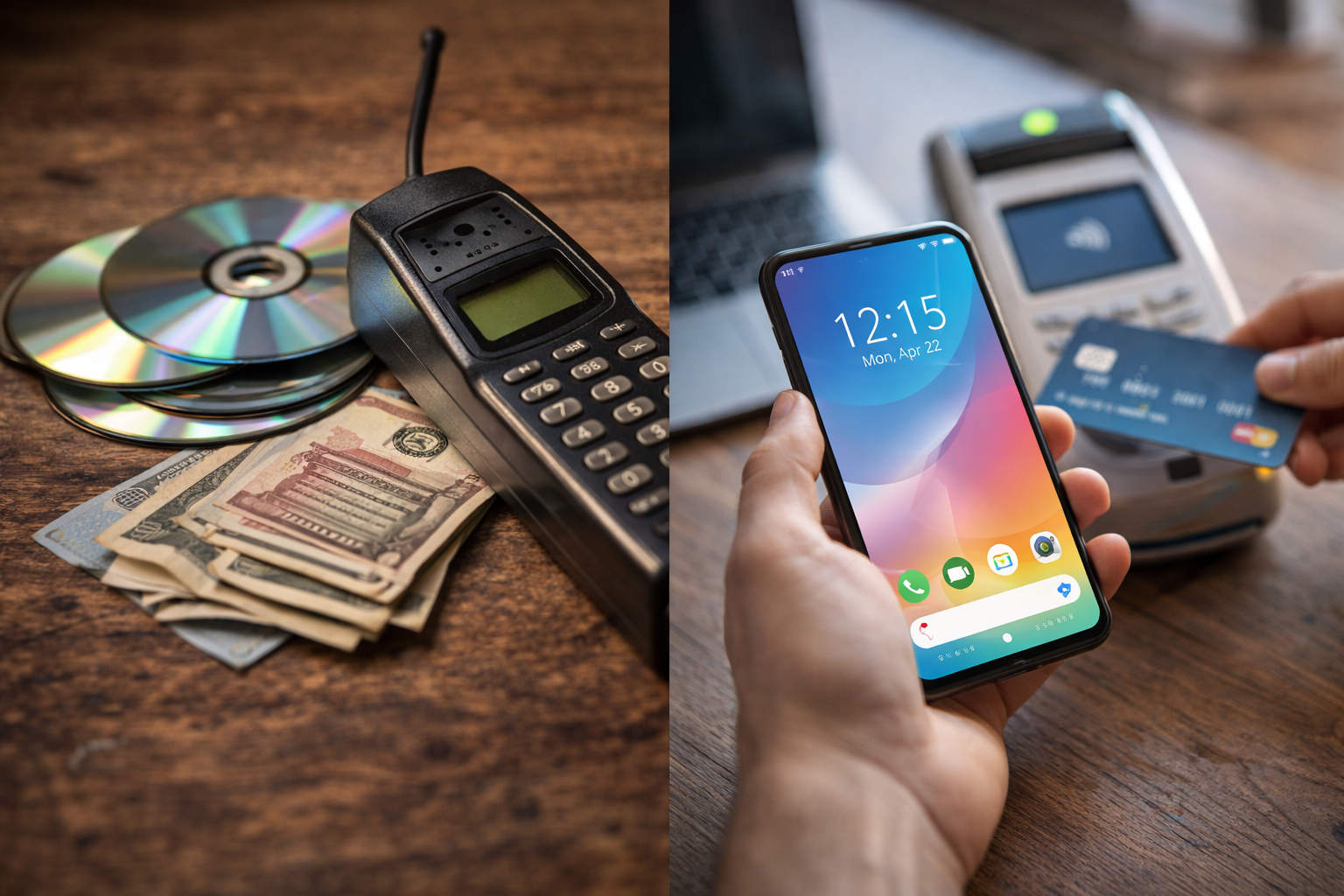
In the past, phones were bigger, but today they are smaller and more powerful. In the past, a phone was heavy and simple. Today it is light and smart.
In the past, people had cameras and maps, but today we have them in one phone. In the past, people listened to music on CDs. Today we listen to music on our phones.
In the past, we went to the bank and we paid with cash more often. Today we go online and we pay by card or phone. In the past, messages were slower, but today they are faster and easier.
Some things were cheaper in the past, but some things are better today. Life was different, and it is different now.
| Adjective (base) | Comparative | Superlative |
|---|---|---|
| big | bigger | the biggest |
| small | smaller | the smallest |
| powerful | more powerful | the most powerful |
| heavy | heavier | the heaviest |
| simple | simpler | the simplest |
| light | lighter | the lightest |
| smart | smarter | the smartest |
| slow | slower | the slowest |
| fast | faster | the fastest |
| easy | easier | the easiest |
| cheap | cheaper | the cheapest |
| different | more different | the most different |
| good | better | the best |
| bad | worse | the worst |
| old | older | the oldest |
| new | newer | the newest |
| long | longer | the longest |
| short | shorter | the shortest |
| expensive | more expensive | the most expensive |
| important | more important | the most important |
| popular | more popular | the most popular |
| interesting | more interesting | the most interesting |
| beautiful | more beautiful | the most beautiful |
| comfortable | more comfortable | the most comfortable |
Rule (simple)
We use comparatives to compare two things:
- Phones are smaller today. (today vs the past)
We use superlatives to talk about one thing in a group (the top/bottom):
- This phone is the smallest.
How to form them
- Short adjectives (1 syllable, or common 2 syllables like easy):
-er / -est → small → smaller → the smallest
Spelling:- big → bigger (double consonant)
- heavy → heavier (y → i + er/est)
- Long adjectives (2+ syllables like powerful, expensive):
more / the most → more powerful / the most powerful - Irregular:
good → better → the best / bad → worse → the worst
Today is Tuesday 10th February 2026
TO BE am / is was
Are were
SUBJECT VERB OBJECT TIME
I was happy yesterday
I am happy yesterday
FAST FASTER fast fashion
SLOW SLOWER slow fashion
EASY EASIER
The tortoise is slow 🐢 but the snail 🐌 is slower
CHEAP CHEAPER than
EXPENSIVE MORE EXPENSIVE
A Renault Clio is cheap, a Ferrari is expensive
Clio is cheaper than Ferrari
Ferrari is more expensive than Clio
Nokias are cheaper than I-phones
I-Phones are more expensive than Nokias
ELEPHANT HIPPO BIG
Elephants are bigger than hippos
The elephant is bigger than the hippo
TORTOISE SNAIL SLOW
Tortoises are slower than snails
TIGER CHEETAH FAST
Cheetahs are faster than tigers
CAT BAT BEAUTIFUL
Cats are more beautiful than bats
OIL WATER EXPENSIVE
Oil is more expensive than water
DOG CAT EASY / FRIENDLY
Cats are easier than dogs
Cats are friendlier than dogs
IS WAS
ARE WERE
HOUSES NOW IN THE PAST BIG
Houses in the past were bigger
Houses now are smaller
PHONES NOW IN THE PAST SMART
Phones now are SMARTER than in the past
MUSIC NOW IN THE PAST GOOD
Music in the past was BETTER
EDUCATION PAST NOW GOOD
Education was better in the past
MEDICINE PAST NOW BAD
Medicine was WORSE in the past
TECHNOLOGY is cheaper now
Technology was more expensive in the past
Technology is more important now
HIPPO ELEPHANT BLUE WHALE
Elephants are bigger than hippos.
The blue whale is the biggest.
The fattest person in the world The tallest person the shortest person
| Infinitive | Past Simple | Past Participle |
|---|---|---|
| be (am/is/are) | was / were | been |
| have | had | had |
| go | went | gone |
| do | did | done |
| make | made | made |
| get | got | got |
| eat | ate | eaten |
| drink | drank | drunk |
| take | took | taken |
| come | came | come |
| see | saw | seen |
| give | gave | given |
| speak | spoke | spoken |
| drive | drove | driven |
| ride | rode | ridden |
| sleep | slept | slept |
| wear | wore | worn |
| buy | bought | bought |
| bring | brought | brought |
| think | thought | thought |
| teach | taught | taught |
| tell | told | told |
| say | said | said |
| read | read | read |
| write | wrote | written |
| meet | met | met |
| keep | kept | kept |
| feel | felt | felt |
| leave | left | left |
| build | built | built |
| find | found | found |
| lose | lost | lost |
Grammar box: Past Simple (A2)
Use: finished actions in the past (yesterday, last week, in 2020, two days ago).
1) Regular verbs
Form (statements): verb + -ed
- work → worked, clean → cleaned, listen → listened
Spelling (quick):
- most verbs: play → played
- e: like → liked
- y → ied: study → studied
2) Negatives
Form: didn’t + base verb (no -ed)
- I didn’t work. / She didn’t listen.
3) Questions
Yes/No: Did + subject + base verb …?
- Did you work yesterday? — Yes, I did. / No, I didn’t.
Wh-: Wh- + did + subject + base verb …?
- Where did you go? / What did she study?
Special verb: BE
Past of be: was / were
- I/he/she/it was … | you/we/they were …
Negative: wasn’t / weren’t
Questions: Was/Were + subject …?
Board: Examples (statement / negative / question)
A) TO BE (was / were)
- Statement: I was tired yesterday.
- Negative: I wasn’t tired yesterday.
- Question: Were you tired yesterday?
B) Regular verb: clean (cleaned)
- Statement: She cleaned the kitchen yesterday.
- Negative: She didn’t clean the kitchen yesterday.
- Question: Did she clean the kitchen yesterday?
C) Irregular verb: go (went)
- Statement: They went to the bank last week.
- Negative: They didn’t go to the bank last week.
- Question: Did they go to the bank last week?
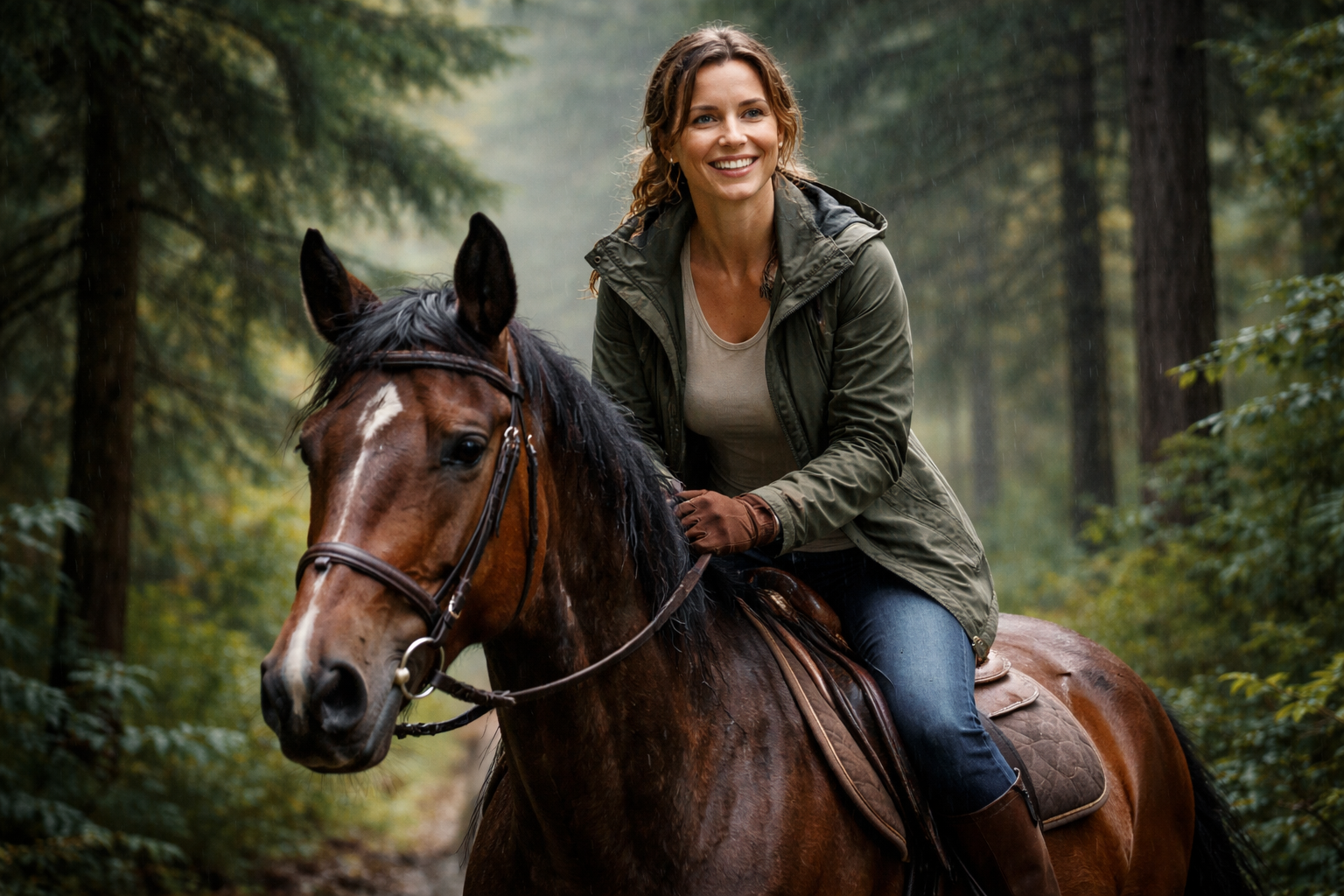
Last weekend was wetter and wilder than usual, and it was more exciting than the weekend before. On Saturday I went to the forest early because I wanted an adventure. The weather was rainy and cold, but I wasn’t unhappy — I was very motivated.
I met a friend at a small riding place and we rode horses into the trees. The paths were muddier than I expected, so we went slowly at first. Later, we found a longer trail that was safer and easier. My horse was stronger than the first one I tried, and I felt more confident. We took photos and we drank hot tea after the ride.
In the evening I didn’t go out. I didn’t watch TV much, and I didn’t work. I made simple soup and I listened to calm music.
On Sunday the rain stopped, but the forest was still wet. I went for a short walk and I got home early. It was the best weekend in a long time — better than staying at home, and definitely more fun.
What did you do last weekend? (On Saturday / On Sunday)
Where did you go (if you went out)?
Who did you spend time with?
What did you eat or drink?
Was your weekend better or worse than the weekend before? Why?
NOW YOU!
HOLIDAY TALK (Past Simple + Comparatives) — Mini Worksheet
1) Choose one holiday / trip
Where? ____________ When? ____________ With who? ____________ How long? ____________
2) Speak (use these sentence frames)
A) Where / When
- I went to ____________ last ____________.
- I stayed for ____________ days / nights.
- The weather was ____________.
B) Who with
- I went with ____________.
- We met ____________. (optional)
C) What did you do? (3 actions)
- I visited ____________.
- I went to ____________.
- I ate / drank / bought / took photos ____________.
- I didn’t ____________ because ____________.
D) What did you see?
- I saw ____________ (a museum / a beach / mountains / a market).
- There were ____________ (people / views / shops).
E) Best / Worst (comparatives)
- The best part was ____________.
- It was better than ____________.
- I didn’t like ____________ because ____________.
- It was more ____________ than I expected. (crowded / expensive / interesting)
F) Finish
- I want to go back because ____________.
OR - I don’t want to go back because ____________.
3) Word bank (small + useful)
Places: beach, mountains, lake, countryside, museum, market, park, old town
Transport: by car, by train, by bus, by plane, on foot
Past verbs: went, stayed, visited, walked, ate, drank, bought, took photos, met, relaxed
Comparatives: better, worse, bigger, smaller, quieter, hotter, colder, more interesting, more crowded, more expensive
Linkers: and, but, because, then, after that
4) Listener: ask 2 questions
- ________________________________ ?
- ________________________________ ?

Today is Wednesday 11th February 2026
More dangerous
Hippos are bigger
Hippos are bigger than gorillas
Chick – baby chicken – boy or girl
Hen – mother rooster – father
Roast
Where did you go yesterday?
I went to… the park
I walked the dog
I went to the doctor’s
I went to the beauty saloon
Waxing Wax
How are you? I’m fine
How were you yesterday? I was tired / I am tired yesterday
I am – I was he is – he was she is – she was
You, we, they are were
Where were you yesterday? I was in the park with my dogs
I was at the beach on the beach
Ate 8 I ate a salad yesterday
I ate a greek yoghurt yesterday
What did you eat? I ate soup
GRAMMAR GYM
I played I didn’t play Did you play?
I went I didn’t go did you go?
She worked she didn’t work Did she work?
We played we didn’t play Did we play?
You ate you didn’t eat did you eat?
WET WETTER than The WETTEST
Brazil is the wettest country in the world
Spain is wetter than Sahara
Tree 🌲 I rode RIDE RODE RIDDEN
Did you ride a bike? No, I didn’t
Mud muddy muddier
She had hangover HANGOVER IN VEGAS
What did you do last weekend? (On Saturday / On Sunday)
I went to the beach, I made soup, I rode the bicycle, I went-shopping
I went home, I relaxed on the sofa, I walked my dogs, I ate all day, I listened to music
I went shopping, I went to hospital, I sold my car
SELL SOLD SOLD
I relaxed at home most of the weekend. I visited a friend on Saturday, I watched a film and I read books.
READ READ /red/ READ
Where did you go (if you went out)?
I didn’t go anywhere
I went to the hospital
I went shopping to the supermarket
I went to San Pedro
Who did you spend time with?
SPEND SPENT SPENT money / time
I spent €5 in the kiosk
I spent my time with a dog
I was with Diego
I was with my two cats and my mother and my son
I was alone
What did you eat or drink?
I ate a pizza I ate yoghurt
I drank tea I ate chicken and I drank beer
Was your weekend better or worse than the weekend before? Why?
My weekend was better because the weather was good.
My weekend was better because I ate burger
It was better because NOT WORK (I didn’t work)
Chips french fries – fries
Air fryer fish & chips
Where? PORTUGAL
When? IN AUGUST
With who? WITH MARIA / ALONE
How long? ONE WEEK
I didn’t buy anything. I bought food and drinks.
The water was pristine
Gipsy ladies
 Lingua-Franca