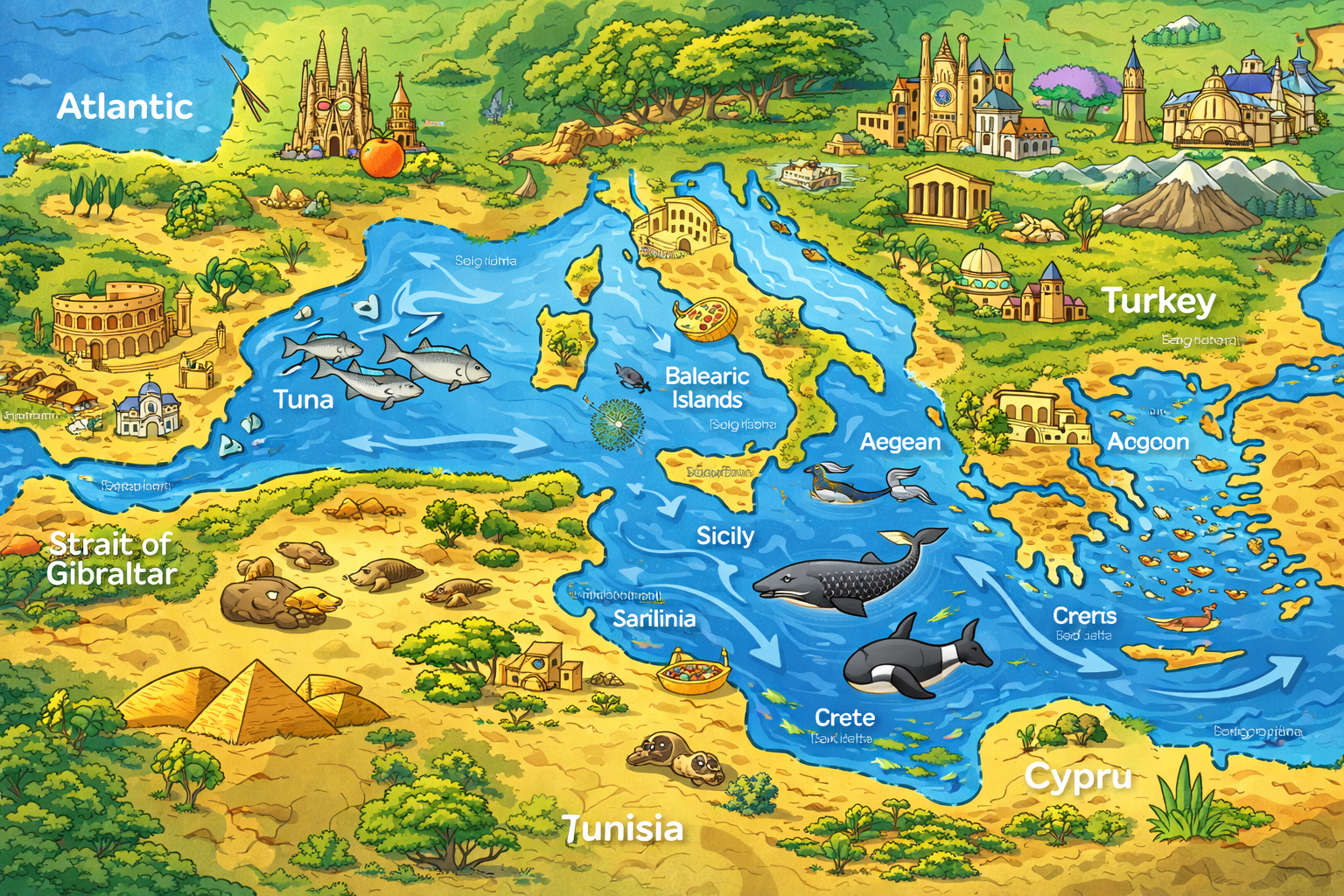
The Mediterranean is our home sea. It is small, warm, and busy. Many people swim, fish, and travel here. Because of this, the sea needs extra care.
One big problem is plastic. Bags and bottles float for a long time. Turtles can eat them by mistake. Old fishing nets also stay in the water and trap animals. Another problem is dirty water from streets and rivers after rain. It carries rubbish and oil into the sea. On the seabed, Posidonia seagrass grows in wide meadows. It makes oxygen and is a home for fish, but boats can damage it with anchors.
The good news: small actions help a lot. We use a refillable bottle and take our rubbish home. We separate waste and recycle at school and at home. On the beach, we keep off the seagrass and walk on marked paths. In the water, we watch sea life but do not touch. Families can join clean-ups and learn about marine reserves. We save water at home, because every drop goes back to nature.
If we act together, the Mediterranean stays blue, full of life, and ready for future summers.
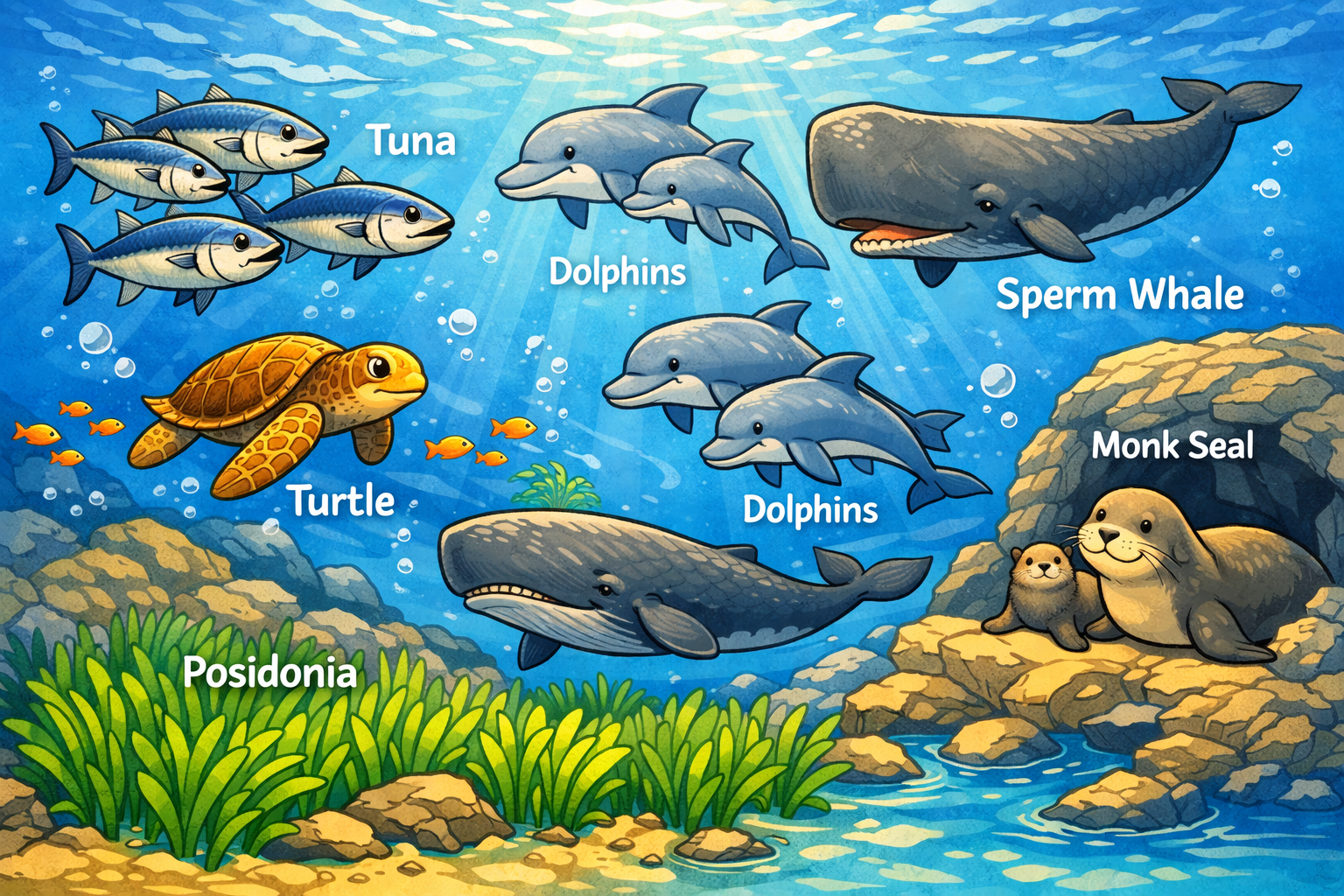
Tuna come first in our sea. Atlantic bluefin tuna cross the Mediterranean each year; they are powerful, warm-bodied fish and one of the fastest, but scientists usually say the sailfish is the fastest fish overall.
Other key Mediterranean species are loggerhead turtles, which nest on sandy beaches; bottlenose dolphins, which hunt in small groups near coasts; sperm whales, the deepest divers here; and the rare Mediterranean monk seal, which needs quiet caves to rest and raise pups.
Under the water grows Posidonia seagrass, a green “forest” that makes oxygen, protects the shore, and is a nursery for many young fish.
If we protect beaches, reduce plastic, and respect marine reserves, these species can survive and grow.
Comprehension
- Is tuna the fastest fish in the ocean? If not, which fish is usually called the fastest?
- Name two Mediterranean species and say one fact about each.
Answer the questions about you. Word bank (use in your sentences)
always / usually / often / sometimes / never • last weekend / yesterday / this summer • I can… / We can… • pick up rubbish • recycle plastics/paper • refill bottle • save water • use public transport • stay off Posidonia • join a beach clean-up • protect / respect / keep
7 questions
- How often do you go to the beach? Where do you usually go?
Starter: “I usually go to ___ twice a month.” - What did you do last time you went to the sea? (3 verbs)
Starter: “Last weekend I swam, picked up rubbish, and relaxed.” - What can you do to help the Mediterranean at the beach? (3 ideas with can)
Starter: “I can use a refill bottle, can pick up plastic, and can stay off the seagrass.” - At home, how do you reduce waste or save water? (2–3 habits with frequency)
Starter: “We often recycle paper and always turn off the tap.” - Which Mediterranean animal do you want to protect most? Why?
Starter: “I want to protect the monk seal because it is rare.” - Have you seen any problems on our beaches? What is one solution?
Starter: “I saw plastic near the rocks. The solution is to add more bins and clean every weekend.” - Your pledge: What are you going to do next month to help the sea? (when/where/how often)
Starter: “I’m going to join a clean-up on Saturday at ___, twice next month.”
 Lingua-Franca