
Midnight in the Big Kitchen
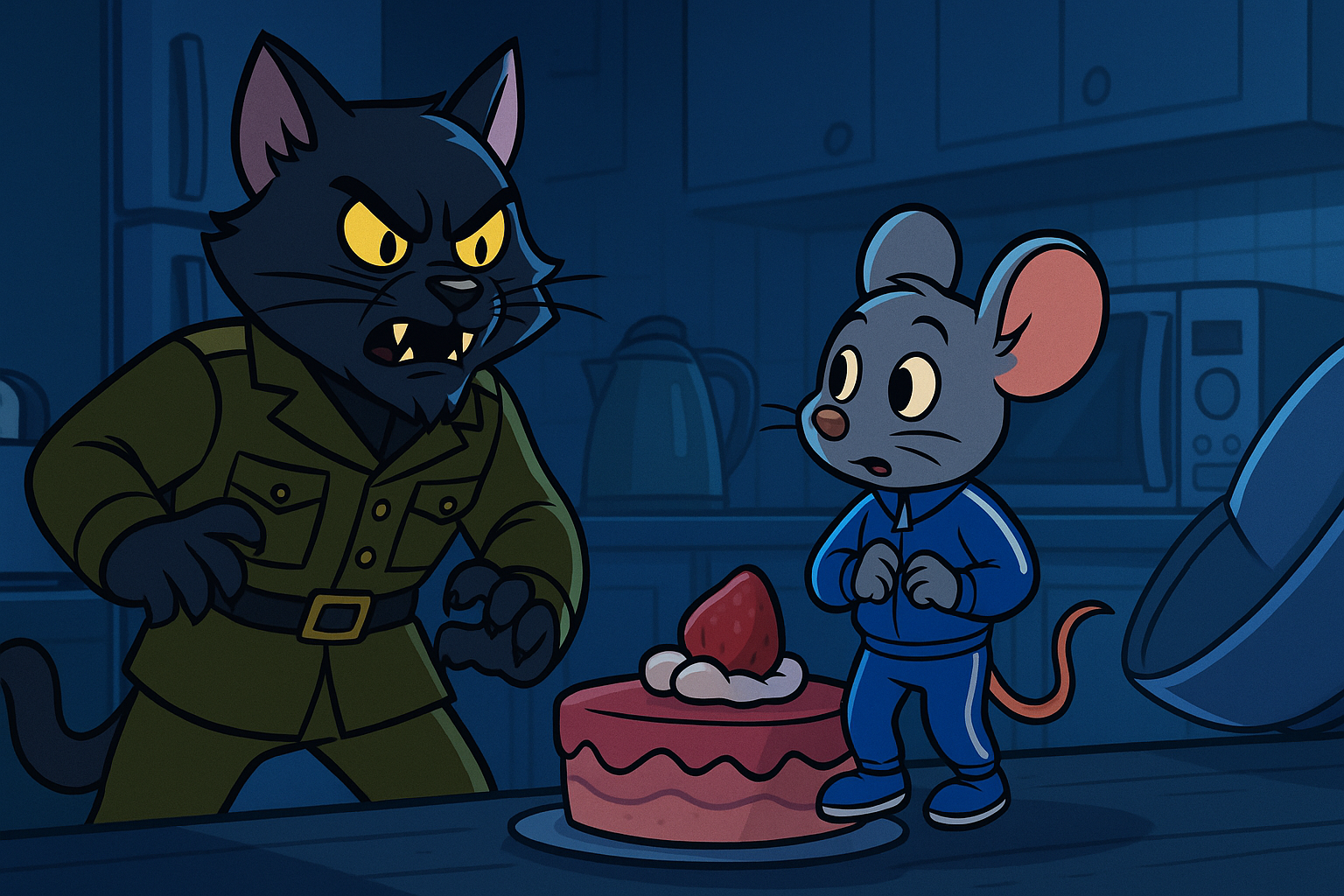
It was night in the big kitchen. The Big Bad Cat walked slowly. A small mouse waited near a hole. While the cat was walking past the toaster, the mouse ate some cheese. When the cat was listening by the fridge, the mouse hid behind the bread. While the kettle was boiling, the mouse ran to the table. When the cat was looking under the table, the mouse sat on the strawberry cake.
The cat heard a sound and moved again. While the cat was checking the oven, the mouse jumped to the sink. When the cat was watching the microwave, the mouse climbed the cupboard. While the cat was turning around, the mouse went through a tiny hole in the wall. The cat hit a bowl; it fell and broke. The mouse was safe.
Activity 1:
- While the cat ______ behind the fridge, the mouse ______ on the strawberry cake. (look, past continuous / hide, past simple)
- When the kettle ______, the mouse ______ to the table. (boil, past continuous / run, past simple)
- The mouse ______ near the hole when the cat ______ a sound. (wait, past continuous / hear, past simple)
- While the cat ______ by the microwave, the mouse ______ behind the bread. (listen, past continuous / hide, past simple)
- The cat ______ under the table when the mouse ______ to the sink. (look, past continuous / jump, past simple)
- While the cat ______ the oven, the mouse ______ the cupboard. (check, past continuous / climb, past simple)
- The mouse ______ some cheese when the cat ______ past the toaster. (eat, past simple / walk, past continuous)
- While the cat ______ around the kitchen, the bowl ______ to the floor. (turn, past continuous / fall, past simple)
- The cat ______ angry when the mouse ______ through the tiny hole. (be, past simple / go, past simple)
- While the mouse ______ very quietly, the cat ______ the wrong place. (move, past continuous / watch, past simple)
The Secret Life of Wild Mice
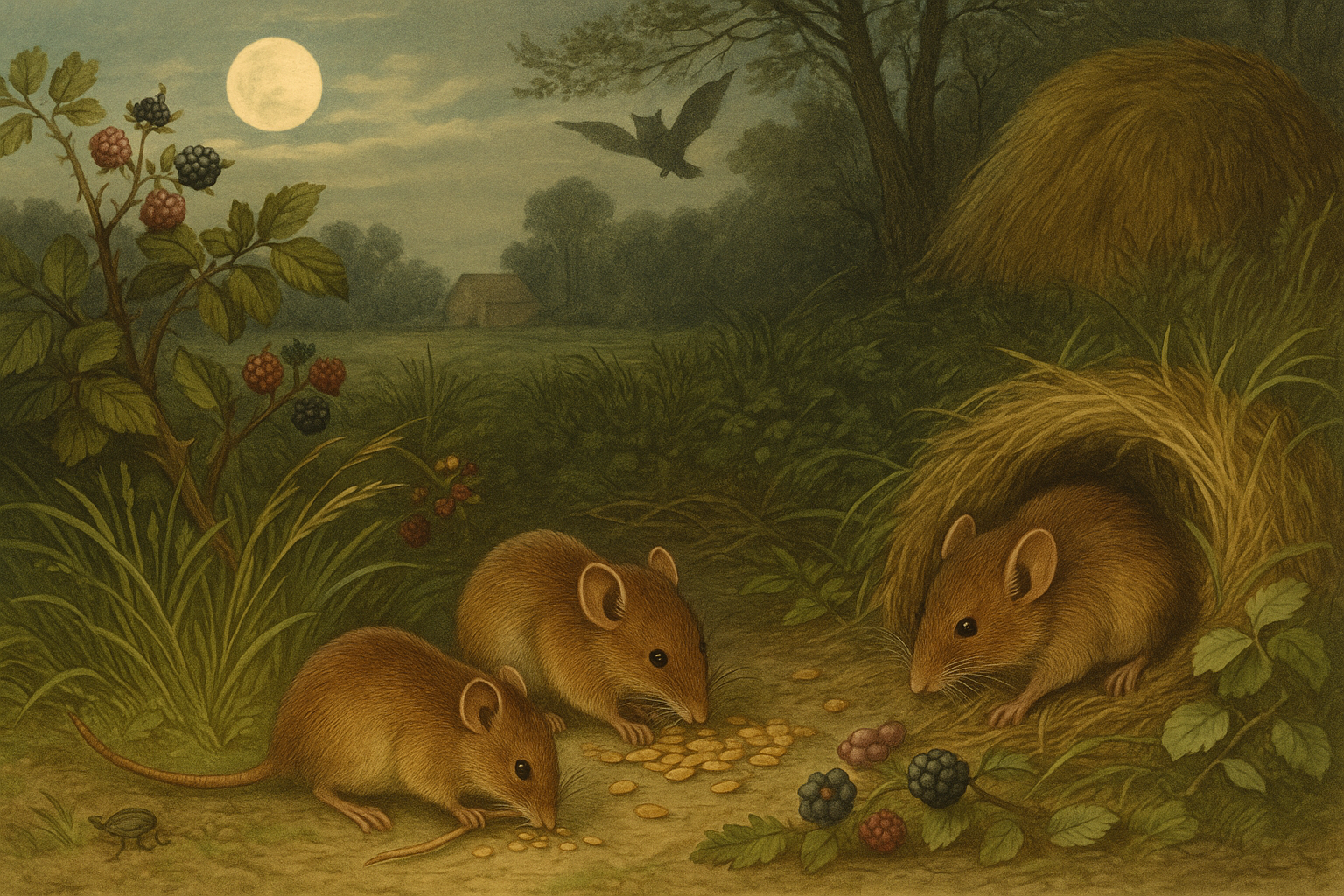
Wild mice are mammals that live in many habitats: fields, hedges, woodlands, and even around farms. They are mostly nocturnal, which means they are busiest at night. A mouse spends the evening foraging for food such as seeds, nuts, fruit, and small insects. By day it rests in a neat nest made from grass and leaves. Mice help the food chain by spreading seeds (new plants grow where they drop them) and by being careful prey for animals like owls and foxes.
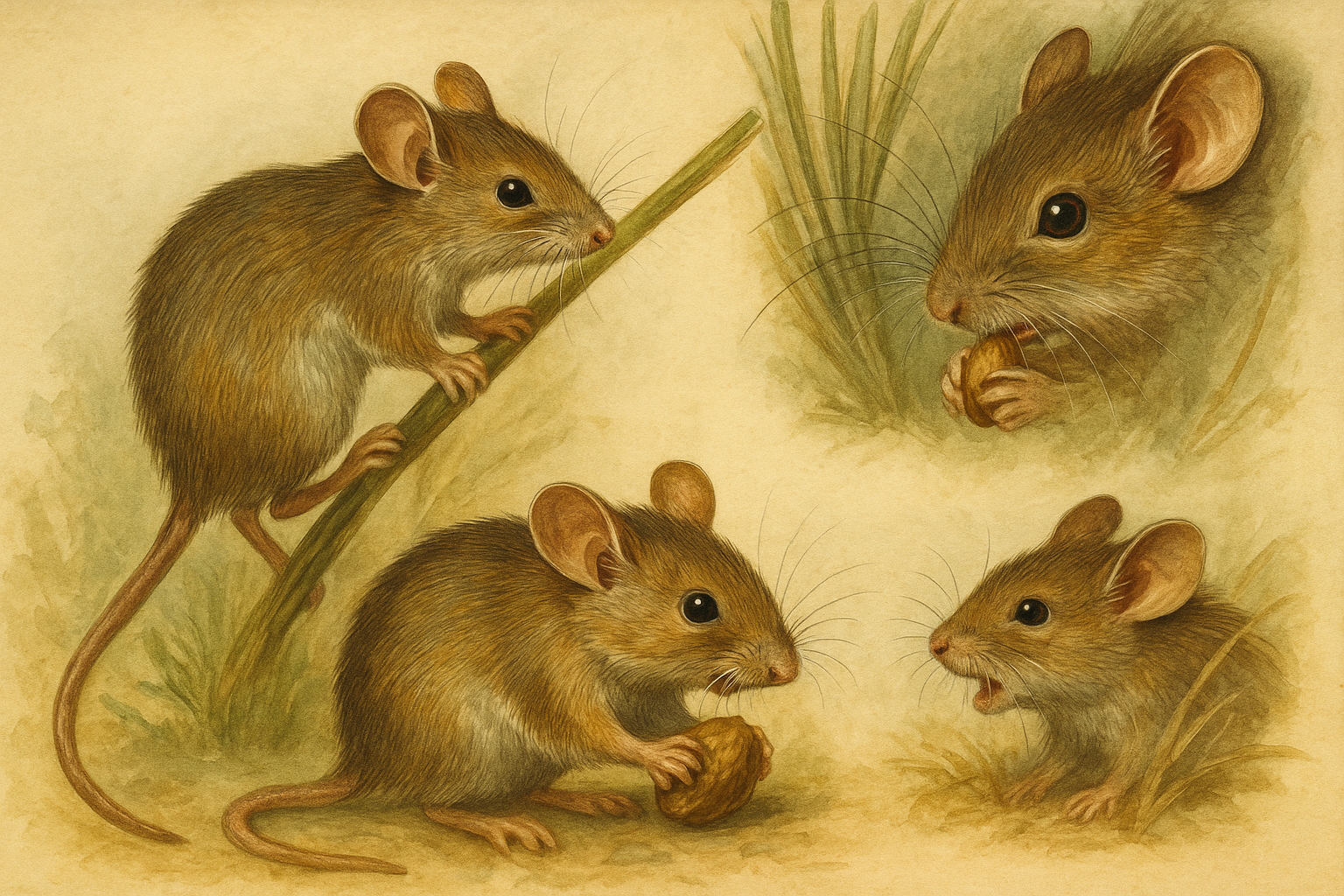
Mice are small, fast, and very well designed for staying safe. Their long whiskers help them sense narrow spaces, their big ears give them excellent hearing, and their tails help with balance when they run or climb. They gnaw often because their front teeth never stop growing—chewing keeps the teeth the right length. Mice also “talk” with quick squeaks and body signals to warn each other about danger.
A mouse family is active and busy. The mother gives birth to live young called pups in a warm nest. Pups grow quickly, learning to hide, climb, and find food. In autumn, mice may store extra seeds to help them through cold nights. Although they are tiny, wild mice play a big part in keeping habitats healthy—like little gardeners of the night!

Activity:
- Do you think mice are brave animals? Why?
- Have you ever seen a mouse (in the wild or in a house)? What happened? Why do you remember it?
- Are mice helpful for nature or mainly a problem for people? Why?
 Lingua-Franca