
| Tense | Form | Use | Time markers | Examples (hobbies/leisure) |
|---|---|---|---|---|
| Past Simple | V2 / -ed; did + base (questions/negatives) | Finished actions/events at a finished time | yesterday, last week, in 2024, ago | Affirm. Michael played online last night. Neg. He didn’t play on Tuesday. Q. Did he watch a stream yesterday? |
| Present Perfect | have/has + past participle | Experiences/changes up to now; unfinished time periods; result now | ever/never, already/yet, just, since/for, this week/year | Affirm. He has joined a club this year. Neg. He hasn’t won a prize yet. Q. Has he ever tried VR games? |
| Key contrast | — | Use Past Simple with a finished time. Use Present Perfect with no finished time or an unfinished period. | — | He played on Saturday (finished). / He has played a lot this week (week not finished). |
List of Irregular Verbs HERE.

Michael has loved video games since he was eight. He got his first console from his cousin, and he spent a whole summer learning the controls. Now he plays after homework and keeps a balanced routine. This year he has joined the school e-sports club, where he practises teamwork, strategy, and fair play.
Last weekend his team competed in a small local tournament and they finished second. Michael hasn’t won a big prize yet, but he has improved a lot and he feels more confident. When he needs a break, he goes cycling or reads comics to rest his eyes. He has also made new friends online, but he knows screen time should be limited.
For him, gaming is the most exciting hobby, but real-life friends are still more important.
1) Comprehension
- Michael started gaming when he was eight. TRUE / FALSE
- His team won the tournament last weekend. TRUE / FALSE
- This year Michael has…
A) left the club
B) joined a school e-sports club
C) stopped gaming - When he needs a break, he…
A) plays more
B) goes cycling or reads comics
C) sleeps all day - Name two skills he practises in the club.
- Why does he limit screen time?
2) Grammar Gap-fill: Past Simple or Present Perfect
Complete with the correct form.
- Michael ______ (love) video games since he was eight.
- He ______ (get) his first console from his cousin.
- His team ______ (compete) in a local tournament last weekend.
- He hasn’t ______ (win) a big prize yet.
- He ______ (make) new friends online recently.
- This year he ______ (join) the school e-sports club.
3) Grammar: Error Correction (Past Simple vs Present Perfect) (6 items)
Each sentence has one tense/time error. Correct it.
- Michael has joined the club last weekend.
- He didn’t ever win a big prize yet.
- This year he joined the e-sports club.
- He has cycled yesterday to rest his eyes.
- Michael has loved video games in 2021.
- He played video games for five years.
4) Link the Two Halves (match A–F with 1–6)
- Michael plays after homework…
- He goes cycling or reads comics…
- He feels more confident…
- He hasn’t won a big prize yet…
- His team finished second…
- He has made new friends online…
A because he knows screen time should be limited.
B so he still wants to keep practising.
C when he needs a break.
D and he has improved a lot this year.
E but real-life friends are more important.
F in a small local tournament.
5) Personal Opinion (speaking/writing)
Use comparatives/superlatives at least twice.
- Which hobby is more relaxing for you, gaming or cycling? Why?
- What is the most exciting game or sport you’ve tried?
- Is online teamwork easier or harder than face-to-face teamwork? Explain.
- Which hobby helps you study better than others? Give an example.
- Choose two hobbies and compare their advantages and disadvantages.
The Super Mario Saga
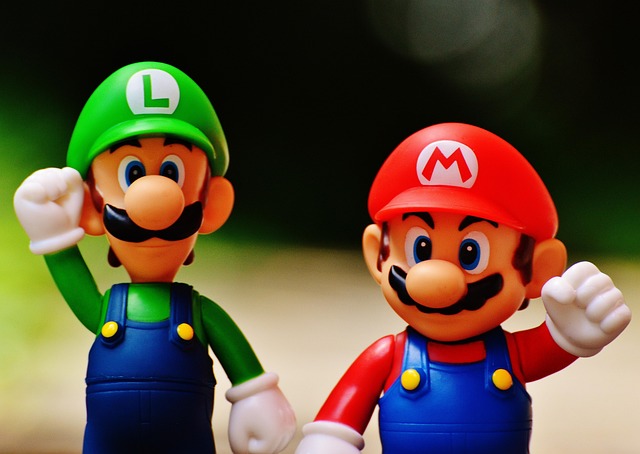
The Super Mario series began in 1985 with Super Mario Bros., a game where Mario ran and jumped through colourful levels to rescue Princess Peach. Created by Nintendo, it quickly became a classic and has stayed popular for decades. In the 1990s, new titles added power-ups, secret areas, and friendly characters like Yoshi. Later, Super Mario 64 brought 3D movement, and the Galaxy games used gravity to create fresh puzzles. In recent years, makers have released Odyssey and creative level-building games. Mario has also appeared in kart and sports games, but the main adventures have kept simple, joyful play that fans love.

Our international class has visited many places this year, and the results say more about families and budgets than passports.
Thirty-two students completed the survey. Learners from Spain often went to coastal towns in July because relatives live there; others flew to Portugal for long weekends.
Italian classmates have preferred short road trips; several drove to lakes and camped for two nights. Students from Poland have chosen cooler plans; some hiked in the Tatra Mountains and took fast trains to nearby cities.
From Turkey, many have explored historical towns; one group visited Cappadocia in mid-August and watched the sunrise from a hilltop.
Our Moroccan classmates mostly stayed with family and have discovered new cafés in their own cities, proving that travel doesn’t always mean distance.
Across groups, budget airlines have made cross-border trips easier, but trains and buses were popular when prices rose. Most students booked accommodation online, yet a quarter have used homestays arranged by relatives.
What about activities? Beach days and city walks were common, while almost everyone has taken photos and shared them later.
The survey also shows a kind rule: classmates have given tips without judging other choices. In short, this summer was different for everyone, but we have learned that good travel is about time together, not kilometres.
Read the article again and choose A, B, C, or D.
- What is the article mainly about?
A travel tips from a teacher
B a class survey on summer travel
C a guide to cheap airlines
D a history of rail travel - How many students took part?
A 14 B 24 C 32 D 40 - Spanish students often travelled to the coast because…
A they won free tickets.
B relatives live there.
C they wanted cooler weather.
D school organised it. - Italian classmates mostly…
A booked package tours.
B preferred long flights.
C took short road trips.
D stayed at home. - Polish students tended to choose…
A mountain hikes and city visits.
B beach resorts in Portugal.
C desert tours.
D cruise ships. - A group from Turkey in mid-August…
A flew to Portugal.
B walked in the Tatra Mountains.
C watched a sunrise in Cappadocia.
D stayed with family. - The writer suggests that “travel doesn’t always mean distance” because some classmates…
A travelled only by bicycle.
B discovered new places in their own cities.
C refused to leave school.
D had lost passports. - When prices rose, many students…
A changed to trains or buses.
B cancelled all trips.
C used taxis more.
D travelled only at night. - About accommodation, a quarter of students…
A used homestays via relatives.
B slept in airports.
C camped every weekend.
D had no bookings. - The class “rule” highlighted in the article is to…
A avoid maps.
B compare costs loudly.
C give tips without judging others.
D post photos during lessons.
Guided Practice (12–15′)
A. Gap-fill (8 items) – choose Present Perfect or Past Simple
- We ______ (take) a ferry on 2 August.
- She ______ (never/try) a hostel.
- Prices ______ (rise) last June.
- I ______ (visit) Lisbon twice this year.
- They ______ (book) the hotel yesterday.
- He ______ (already/see) the mountains three times.
- My parents ______ (drive) to the coast last weekend.
- Students ______ (share) many photos since July.
B. Word order (6 items)
- ever / you / Have / travelled / by ferry / ?
- last / went / We / camping / weekend
- booked / already / has / She / tickets
- bus / the / did / When / you / take / ?
- haven’t / We / decided / yet
- museum / visited / They / a / in August
Speaking Drills (8–10′)
Experience vs detail (pair):
A: Have you ever… flown at night / stayed in a hostel / travelled by sleeper train?
B: Yes, I have. → give one Past Simple detail (When? Where? With whom?).
Lesson 2 (60′)
Review Starter (5′)
On mini boards write: one PP sentence + one PS sentence from your summer.
Transformation (10–12′) – 10 items
Change as directed.
- I travelled to Italy last July. → PP (experience)
- She hasn’t tried couchsurfing. → PS (give a finished-time example to contradict)
- They booked the flat two days ago. → PP (result now)
- We have visited three capitals this year. → PS (add a month)
- He never flew alone. → PP (ever?)
- Did you stay with relatives last week? → PP (since/for)
- We have already checked in online. → PS (yesterday)
- I took the 7 a.m. train on Monday. → PP (ever?)
- She has lived in hostels for two months. → PS (finished last week)
- They didn’t share photos in June. → PP (yet)
Reading Mini-task (10–12′) – MCQ set (A–D)
Personal Q&A (10′)
Prompts:
- Have you ever travelled with classmates? Where?
- Where did you go last summer? What did you do there?
- How long have you known your best travel partner?
Communicative Task (15′) – Travel Fair (info-gap)
Pairs receive different student profiles (budget, time, interests). Negotiate one weekend plan and present: 2 PP experience sentences + 2 PS detail sentences.
 Lingua-Franca